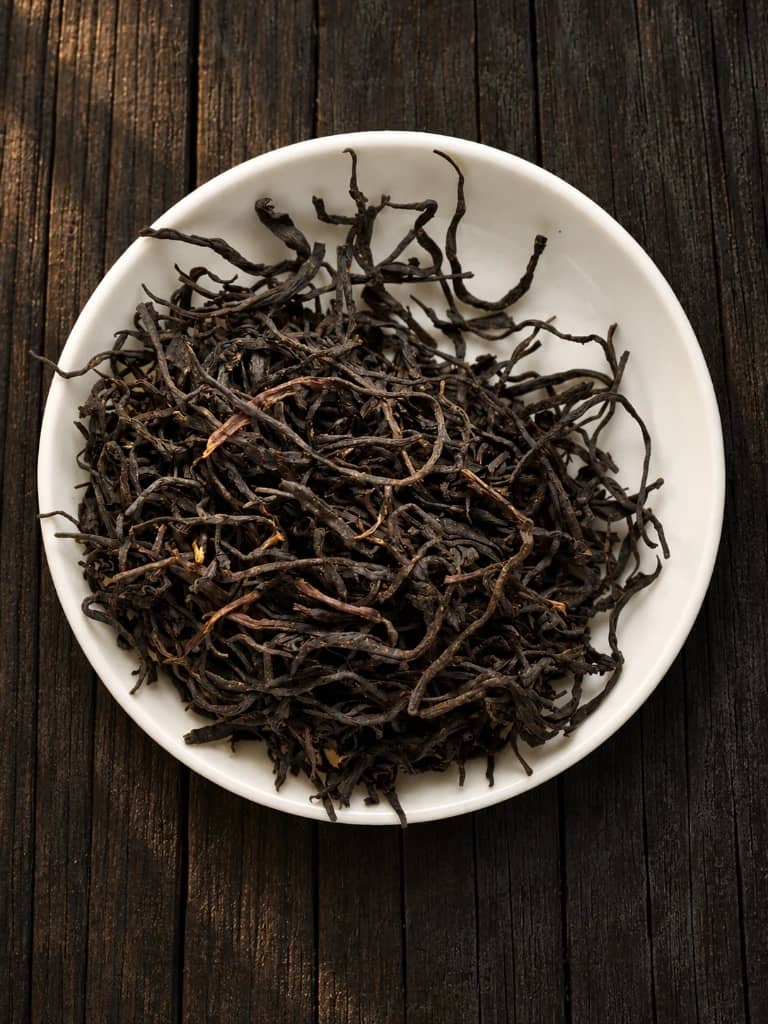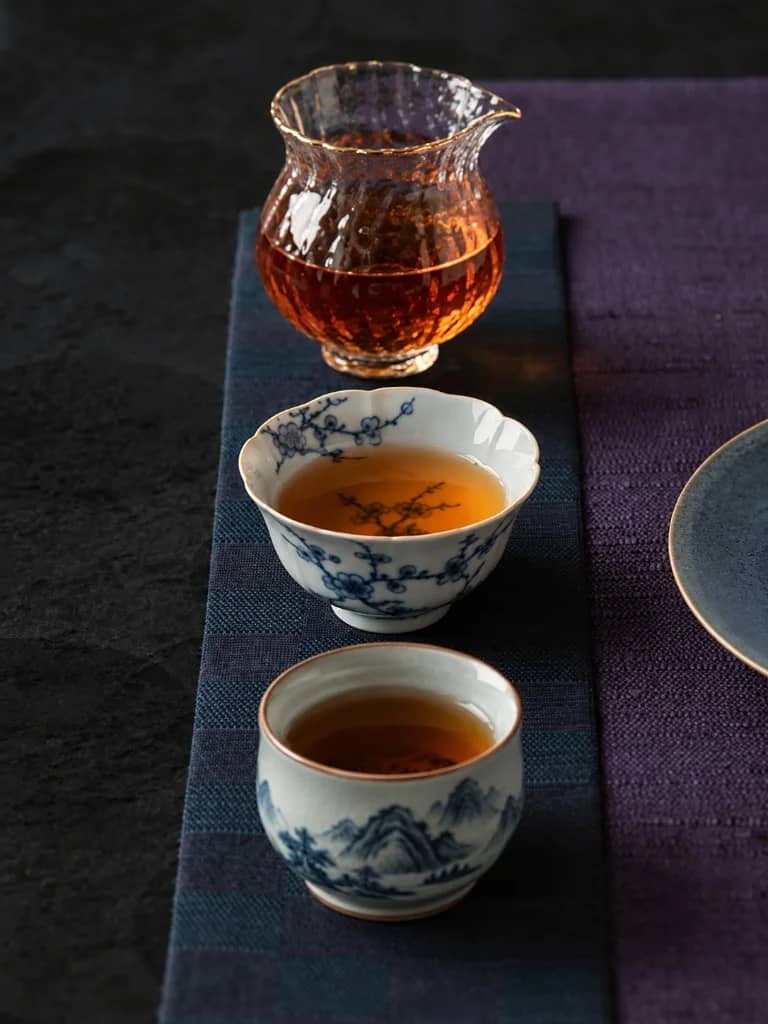
RED · 100 g
Wild Red Plum
A fruit-forward red tea with dark plum, muscatel and red berry notes, balanced by a gently tart finish.
€28
Tasting qualities
Dark plum / Muscatel / Wild red berry / Juicy acidity
Origin
Yunnan, China
- Farmer / producer
- To be announced.
- Garden
- To be announced.
- Location
- To be announced.
- Altitude
- To be announced.
Harvest & processing
- Harvest
- To be announced.
- Processing
- To be announced.
- Lot
- To be announced.
Source story
To be announced.
A starting point to explore with your own water. Adjust the recipe to the cup you enjoy.
Gongfu · repeated infusions
Short infusions
Suggested starting point
- Tea
- 4–5 g
- Water
- 100 ml
- Temperature
- 90–95°C
- Time
- 15–20 sec
Infuse in a gaiwan or small teapot, pour out fully, then repeat with fresh water.
Everyday · grandpa style
Leaves in the cup
Suggested starting point
- Tea
- 2 g
- Water
- 300 ml
- Temperature
- 90°C
- Time
- Start tasting after 2 min
Leave the leaves in a roomy cup. Sip when comfortable and top up when roughly half the water remains.
Water we used
To be announced.
Our approach to brewing
We invite you to find your own way of brewing, guided by your water and your intention.
Follow the point where pleasant fruit tartness becomes drying. Shorten the pour if that balance tips; add time when fruit and body recede. A slightly cooler cup may make the distinction easier to taste.
Our exploration
Stay open to change.
Try noticing the passage from fruit to tartness to the finish without preferring one stage. Carry that openness into a familiar seated practice.
Focus · Responsiveness and openness
| Asana | Sukhasana — notice small changes without correcting every one. |
|---|---|
| Dantian | Middle dantian — return to the centre of the chest. |
| Chakra | Anahata — let attention rest around the breastbone. |
| Meridian | Liver channel — trace its familiar pathway as a focus for meditation. |
Community exploration
What did you notice while drinking Wild Red Plum or afterwards?
Share your exploration
Tea in the historical record.
Historical descriptions reflect the views of their time.
Tea in Buddhist and Taoist practice
Wakefulness & bodily lightness
Tea broadly · Tang accounts collected by Feng Yan and Lu Yu
Feng Yan records permission to drink tea among Chan students at Lingyan monastery whose training involved staying awake.[1] Lu Yu preserves a passage attributed to Tao Hongjing associating bitter tea with bodily lightness and naming immortal figures as drinkers.[2]
References
- Fengshi Wenjian Ji Jiaozhu (封氏聞見記校注)ISBN 9787101047226
- The Classic of TeaISBN 9780316534505