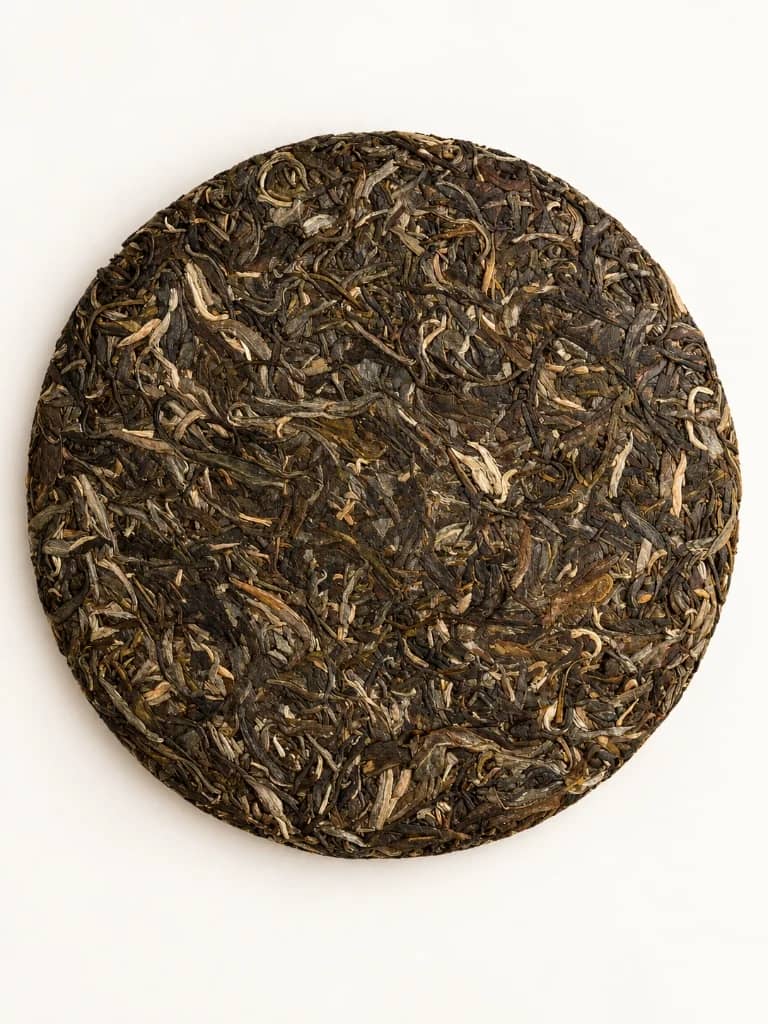
PU-ERH · 400 g
Snow Mountain Raw Pu-erh, 2013
A raw Pu-erh cake listed as Snow Mountain, 2013, with herbal bitterness, menthol-like freshness and returning sweetness.
€54
Tasting qualities
Alpine herbs / Structured bitterness / Cooling menthol / Enduring hui gan
Origin
Xue Shan, Lincang, Yunnan, China
- Farmer / producer
- To be announced.
- Garden
- To be announced.
- Location
- To be announced.
- Altitude
- To be announced.
Harvest & processing
- Harvest
- To be announced.
- Processing
- To be announced.
- Lot
- To be announced.
Source story
To be announced.
A starting point to explore with your own water. Adjust the recipe to the cup you enjoy.
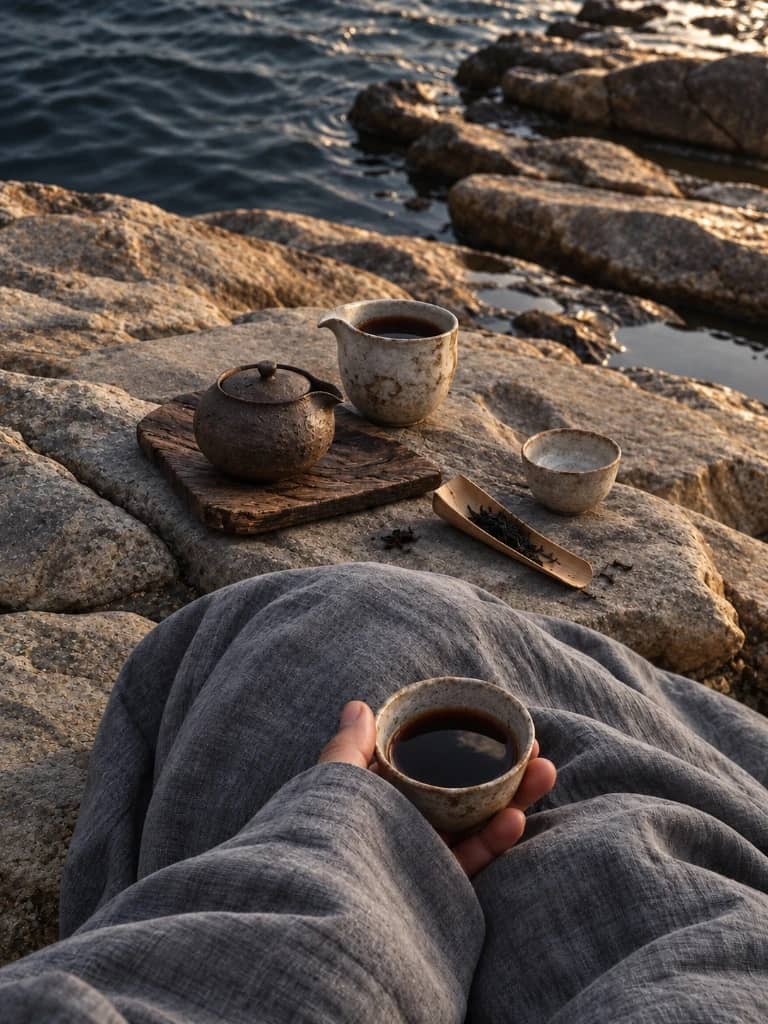
Gongfu · repeated infusions
Short infusions
Suggested starting point
- Tea
- 5 g
- Water
- 100 ml
- Temperature
- 90–95°C
- Time
- 10–15 sec
Loosen the cake into flakes and let the leaf hydrate. Pour out fully; shorten the next infusion if bitterness dominates.
Everyday · grandpa style
Leaves in the cup
Suggested starting point
- Tea
- 2 g
- Water
- 300 ml
- Temperature
- 90°C
- Time
- Start tasting after 2 min
Use a small intact flake in an open mug. Sip when comfortable and top up early if the liquor becomes strong.
Water we used
To be announced.
Our approach to brewing
We invite you to find your own way of brewing, guided by your water and your intention.
Let the bitter finish settle before judging the next pour. If sweetness is obscured by dryness, reduce contact time first; try cooler water next. The first few infusions can strengthen as a compressed flake opens.
Our exploration
Watch a sensation change.
Try following bitterness as it fades into the finish, without rushing to name it good or bad. Bring that same curiosity to a familiar seated practice.
Focus · Observation and patience
| Asana | Sukhasana — keep the posture easy while sensations change. |
|---|---|
| Dantian | Upper dantian — notice attention without narrowing it. |
| Chakra | Ajna — observe with a relaxed brow. |
| Meridian | Bladder channel — trace its familiar pathway without trying to alter sensation. |
Community exploration
What did you notice while drinking Snow Mountain Raw Pu-erh, 2013 or afterwards?
Share your exploration
Tea in the historical record.
Historical descriptions reflect the views of their time.
Pu-erh in Qing records
Pu-erh in compressed forms
Historical Pu-erh · Zhao Xuemin, Bencao Gangmu Shiyi, vol. 6
Zhao Xuemin records Pu-erh from Yunnan in large, medium and small compressed forms, including large tribute rounds.[1] The entry concerns historical Pu-erh broadly; it does not identify this cake or its processing.
In the libraryBencao Gangmu Shiyi (本草纲目拾遗) ↗
Tea in Buddhist and Taoist practice
Wakefulness & bodily lightness
Tea broadly · Tang accounts collected by Feng Yan and Lu Yu
Feng Yan records permission to drink tea among Chan students at Lingyan monastery whose training involved staying awake.[2] Lu Yu preserves a passage attributed to Tao Hongjing associating bitter tea with bodily lightness and naming immortal figures as drinkers.[3]
References
- Bencao Gangmu Shiyi (本草纲目拾遗)ISBN 7800896714
- Fengshi Wenjian Ji Jiaozhu (封氏聞見記校注)ISBN 9787101047226
- The Classic of TeaISBN 9780316534505