OOLONG · 100 g
Rou Gui
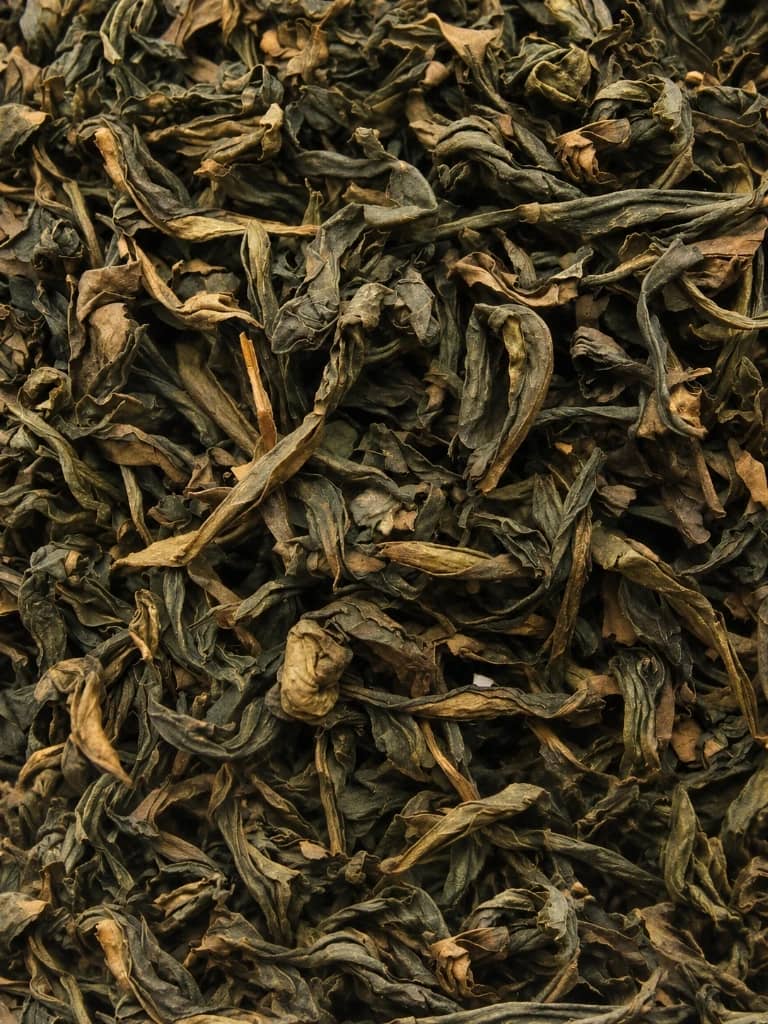
Wuyi rock oolong with cinnamon-like spice, roasted depth and a floral finish.
€32
Tasting qualities
Cinnamon bark / Roasted stone / Dark honey / Mineral warmth
Origin
Wuyi Mountains, Fujian, China
- Farmer / producer
- To be announced.
- Garden
- To be announced.
- Location
- To be announced.
- Altitude
- To be announced.
Harvest & processing
- Harvest
- To be announced.
- Processing
- To be announced.
- Lot
- To be announced.
Source story
To be announced.
Use the recipe tested with our water as a reference, then explore your own approach.
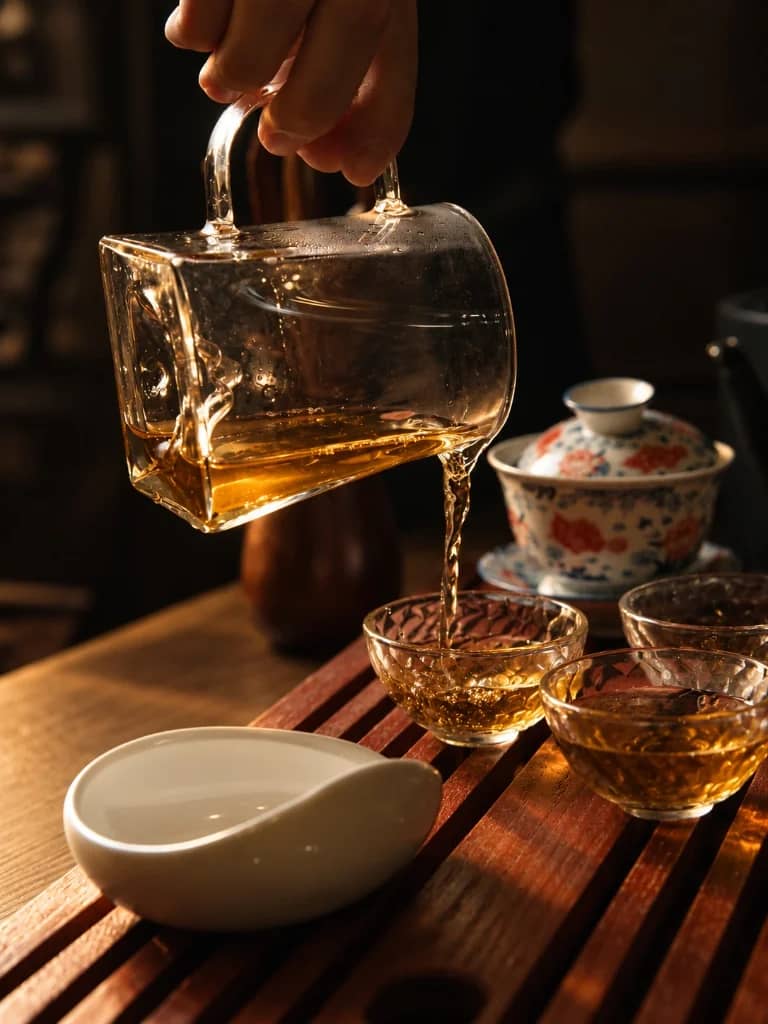
Gongfu · repeated infusions
Short infusions
With our water
- Tea
- 6–7 g
- Water
- 100 ml
- Temperature
- 95°C
- Time
- 2–10 sec
Use a gaiwan or small teapot and drain completely between infusions.
Everyday · grandpa style
Leaves in the cup
Suggested starting point
- Tea
- 2 g
- Water
- 300 ml
- Temperature
- 95°C
- Time
- Start tasting after 2 min
Leave the leaves in a roomy cup. Sip when comfortable and top up when roughly half the water remains.
Water we used
- Water
- Bakhmaro · Still spring water
- Total minerals (mg/L)
- 70–150 · total mineralisation
Our approach to brewing
We invite you to find your own way of brewing, guided by your water and your intention.
For our first three infusions, a 2–10 second pause after filling is a useful place to begin; filling and pouring add contact time. Taste the balance of roast, fragrance and dryness after each pour, then let that guide the next one. Your water and your preference come first.
Our exploration
Steadiness without force.
Explore a warm, settled quality while drinking Rou Gui or afterwards. Let attention stay steady without adding effort.
Focus · Warmth and composure
| Asana | Tadasana — settle into your feet; keep the upper body easy. |
|---|---|
| Dantian | Lower dantian — rest attention below the navel. |
| Chakra | Manipura — notice the solar plexus without seeking a stronger sensation. |
| Meridian | Stomach channel — trace its familiar pathway with attention. |
Community exploration
What did you notice while drinking Rou Gui or afterwards?
Share your exploration
Tea in the historical record.
Historical descriptions reflect the views of their time.
Wuyi tea
Warmth, digestion & the movement of qi
Wuyi tea · Qing materia medica
Zhao Xuemin’s Bencao Gangmu Shiyi associates Wuyi tea with digestion and the downward movement of qi, and records a description of it as warming.[1] Historical interpretations differed: Ling Huan’s Bencao Haili describes Wuyi tea as slightly cold.[2]
Tea, monks & a calmer disposition
Wuyi tea · Yuan Mei, Suiyuan Shidan · Qing travel account
Yuan Mei describes Wuyi tea offered by monks and Daoists. After drinking it, he writes of agitation and self-importance easing, and his disposition becoming more agreeable.[3]
Tea in Buddhist and Taoist practice
Buddhism · wakefulness in Chan practice
Tea in general · Feng Yan, Fengshi Wenjian Ji, vol. 6 · Tang account
Feng Yan records that Chan students at Lingyan monastery, whose training involved staying awake, were permitted to drink tea.[4]
In the libraryFengshi Wenjian Ji Jiaozhu (封氏聞見記校注) ↗
Taoism · tea and bodily lightness
Tea in general · Lu Yu, The Classic of Tea, chapter 7 · Tang compilation
Lu Yu quotes a record attributed to Tao Hongjing that associates bitter tea with bodily lightness and transformation, naming the immortals Danqiuzi and Huangshanjun as drinkers.[5]
In the libraryThe Classic of Tea ↗
References
- Bencao Gangmu Shiyi (本草纲目拾遗)ISBN 7800896714
- Bencao Haili (本草害利)
- The Way of Eating: Yuan Mei’s Manual of Gastronomy (Suiyuan Shidan)ISBN 9781614728276
- Fengshi Wenjian Ji Jiaozhu (封氏聞見記校注)ISBN 9787101047226
- The Classic of TeaISBN 9780316534505