PU-ERH · 1 g
Pu-erh Resin
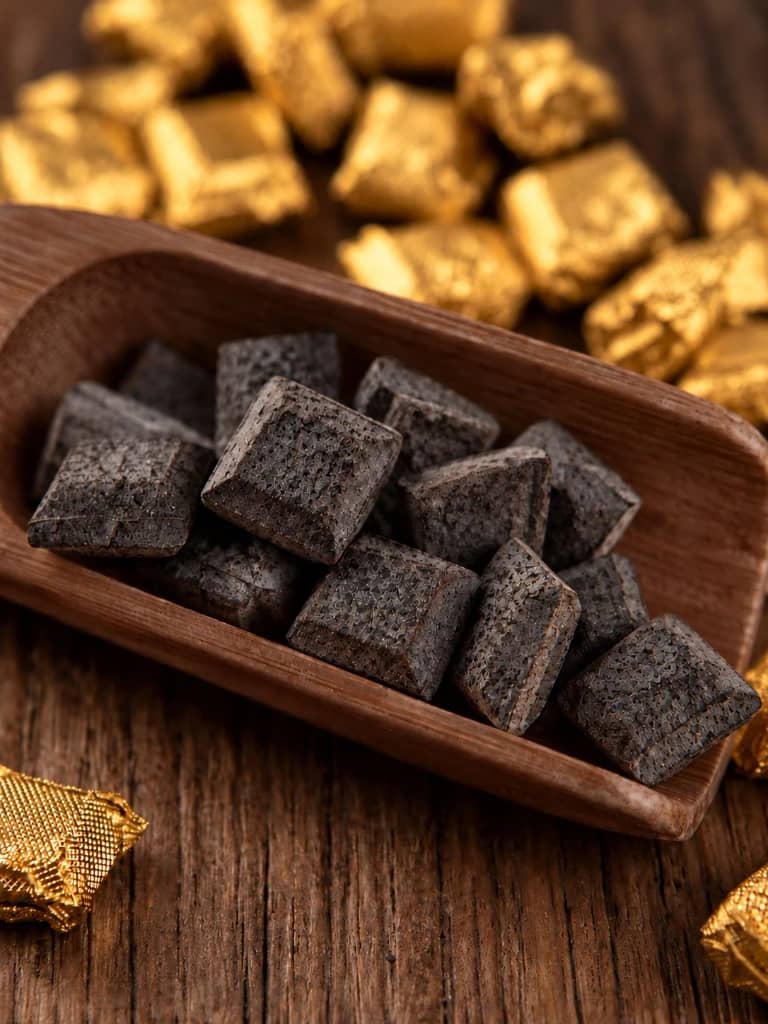
Cha Gao is a concentrated Pu-erh tea paste that dissolves in hot water, with notes of dark malt, cocoa and a mineral finish.
€15
Tasting qualities
Concentrated liquor / Dark malt / Warm cocoa / Clean mineral finish
Origin
Yunnan, China
- Farmer / producer
- To be announced.
- Garden
- To be announced.
- Location
- To be announced.
- Altitude
- To be announced.
Harvest & processing
- Harvest
- To be announced.
- Processing
- To be announced.
- Lot
- To be announced.
Source story
To be announced.
A starting point to explore with your own water. Adjust the recipe to the cup you enjoy.
Dissolve in water
Dissolve and share
Suggested starting point
- Tea
- 0.2 g resin
- Water
- 200 ml
- Temperature
- 95°C
- Time
- Until fully dissolved
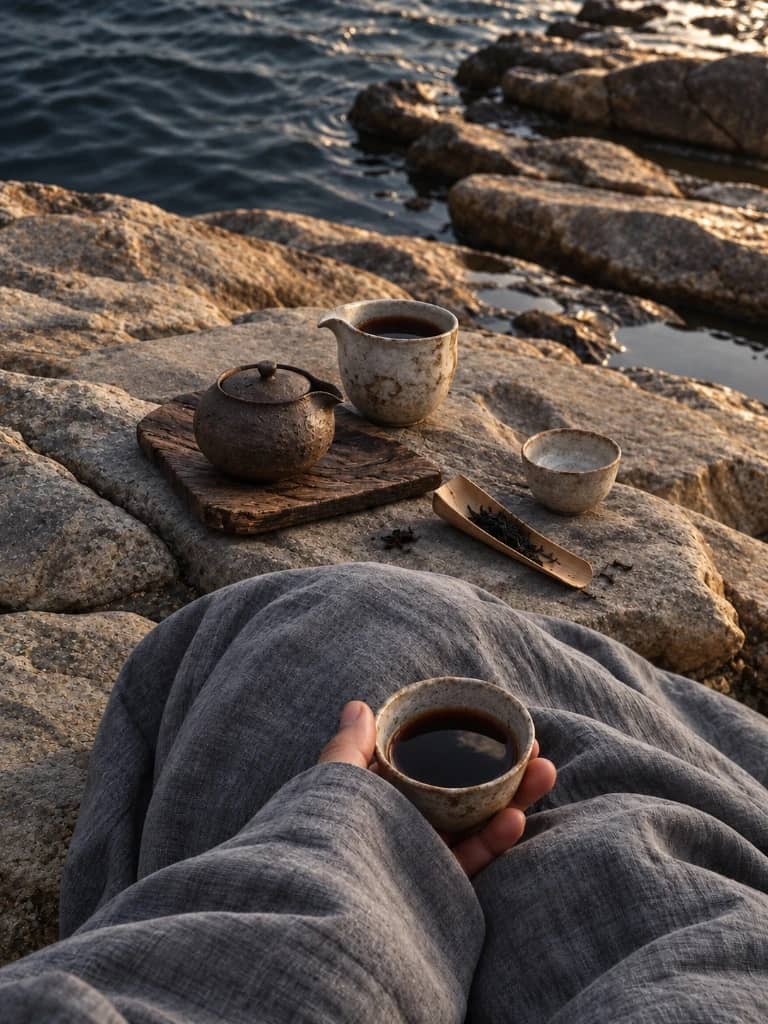
Dissolve the resin in a pitcher, stir gently and divide between small cups. Add water to soften the strength.
Dissolve in water
Dissolve in a mug
Suggested starting point
- Tea
- 0.5 g resin
- Water
- 500 ml
- Temperature
- 95°C
- Time
- Until fully dissolved
Stir into hot water in a large mug or flask. Dilute to taste; there are no leaves to re-steep.
Water we used
To be announced.
Our approach to brewing
We invite you to find your own way of brewing, guided by your water and your intention.
Resin is an extract: strength depends on the amount dissolved and the final volume of water. Start dilute, stir until dissolved and adjust with water. Adding water after dissolution dilutes the same serving; it does not make another infusion.
Our exploration
Choose one simple focus.
Try setting aside the sequence of repeated pours and staying with one cup instead. Use it as a prompt for a brief, familiar practice with a single point of attention.
Focus · Simplicity and attention
| Asana | Sukhasana — settle into an easy seat for a short practice. |
|---|---|
| Dantian | Lower dantian — return gently to the lower abdomen. |
| Chakra | Ajna — keep attention light rather than concentrated. |
| Meridian | Heart channel — trace its familiar course without pursuing a sensation. |
Community exploration
What did you notice while drinking Pu-erh Resin or afterwards?
Share your exploration
Tea in the historical record.
Historical descriptions reflect the views of their time.
Pu-erh paste in Qing records
A record of Pu-erh paste
Pu-erh tea paste · Zhao Xuemin, Bencao Gangmu Shiyi, vol. 6
Alongside compressed tea, Zhao Xuemin explicitly names Pu-erh tea paste and describes a dark, lacquer-like form.[1] This documents an earlier tea paste, without establishing how this product was made.
In the libraryBencao Gangmu Shiyi (本草纲目拾遗) ↗
Tea in Buddhist and Taoist practice
Wakefulness & bodily lightness
Tea broadly · Tang accounts collected by Feng Yan and Lu Yu
Feng Yan records permission to drink tea among Chan students at Lingyan monastery whose training involved staying awake.[2] Lu Yu preserves a passage attributed to Tao Hongjing associating bitter tea with bodily lightness and naming immortal figures as drinkers.[3]
References
- Bencao Gangmu Shiyi (本草纲目拾遗)ISBN 7800896714
- Fengshi Wenjian Ji Jiaozhu (封氏聞見記校注)ISBN 9787101047226
- The Classic of TeaISBN 9780316534505