GREEN · 100 g
Mao Jian / Hairy Tips
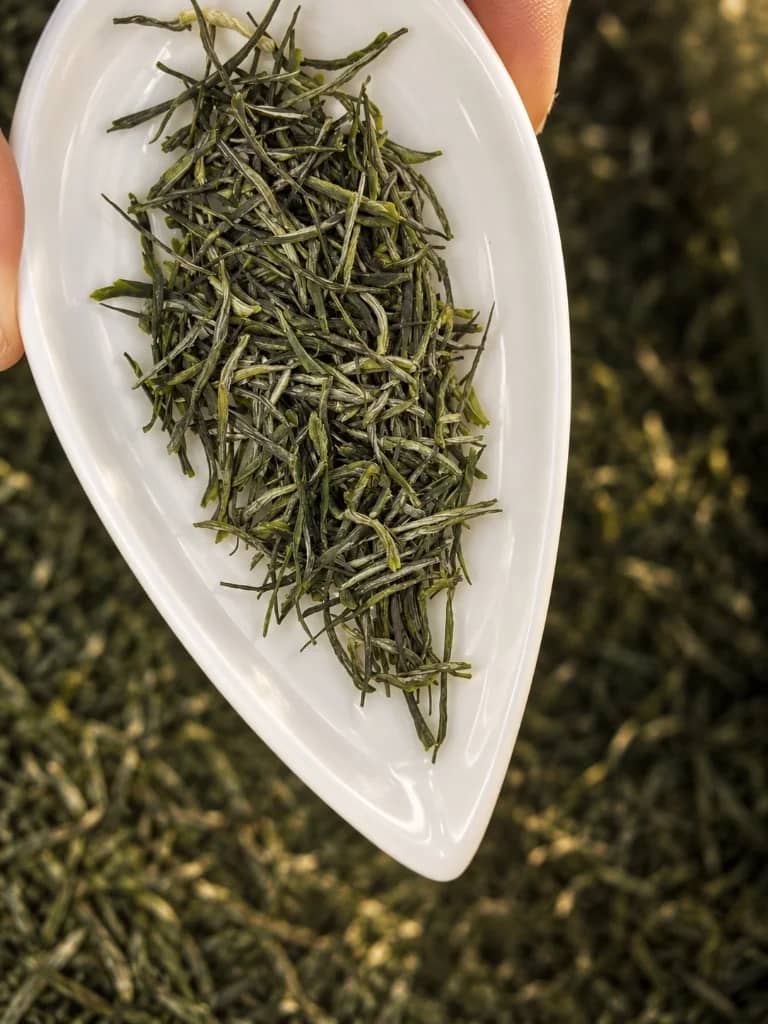
Slender, downy green tea leaves with chestnut-like notes, fresh vegetal sweetness and a clean finish.
€24
Tasting qualities
Crisp chestnut / Fresh meadow / Steamed greens / Sweet dew
Origin
Henan, China
- Farmer / producer
- To be announced.
- Garden
- To be announced.
- Location
- To be announced.
- Altitude
- To be announced.
Harvest & processing
- Harvest
- To be announced.
- Processing
- To be announced.
- Lot
- To be announced.
Source story
To be announced.
A starting point to explore with your own water. Adjust the recipe to the cup you enjoy.
Gongfu · repeated infusions
Short infusions
Suggested starting point
- Tea
- 3 g
- Water
- 100 ml
- Temperature
- 80°C
- Time
- 20–30 sec
Infuse in a gaiwan or small teapot, pour out fully, then repeat with fresh water.
Everyday · grandpa style
Leaves in the cup
Suggested starting point
- Tea
- 2 g
- Water
- 300 ml
- Temperature
- 80°C
- Time
- Start tasting after 2 min
Pour water into an open glass, then add the leaves. Sip when comfortable and refill at halfway.
Water we used
To be announced.
Our approach to brewing
We invite you to find your own way of brewing, guided by your water and your intention.
Start gently and keep the vessel open between pours. Notice when sweetness gives way to dryness; shorten the next infusion or lower the temperature. A few clear, balanced cups matter more than a fixed infusion count.
Our exploration
Clarity without strain.
Try using the contrast between fresh aroma and a clean finish to notice when attention is clear and when it becomes effortful. Return lightly each time it wanders.
Focus · Clarity and ease
| Asana | Sukhasana — keep the face and jaw soft as you sit. |
|---|---|
| Dantian | Upper dantian — rest attention lightly behind the brow. |
| Chakra | Ajna — observe the brow area without fixing the gaze. |
| Meridian | Bladder channel — trace the familiar course along the back with attention. |
Community exploration
What did you notice while drinking Mao Jian / Hairy Tips or afterwards?
Share your exploration
Tea in the historical record.
Historical descriptions reflect the views of their time.
Tea in Buddhist and Taoist practice
Wakefulness & bodily lightness
Tea broadly · Tang accounts collected by Feng Yan and Lu Yu
Feng Yan records permission to drink tea among Chan students at Lingyan monastery whose training involved staying awake.[1] Lu Yu preserves a passage attributed to Tao Hongjing associating bitter tea with bodily lightness and naming immortal figures as drinkers.[2]
References
- Fengshi Wenjian Ji Jiaozhu (封氏聞見記校注)ISBN 9787101047226
- The Classic of TeaISBN 9780316534505