GREEN · 100 g
Imperial Jasmine
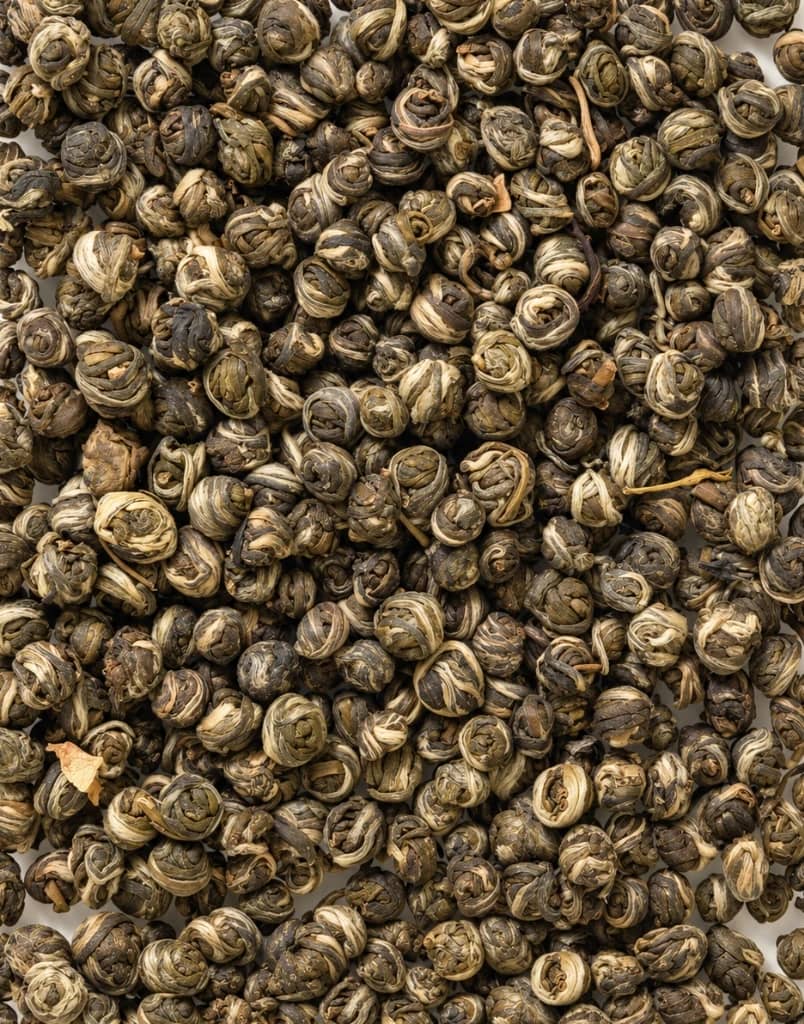
Jasmine-scented tea pearls that slowly unfurl, with a rounded floral aroma and silky sweetness.
€28
Tasting qualities
Intense jasmine blossom / Silky sweetness / White nectar / Crisp finish
Origin
Fujian, China
- Farmer / producer
- To be announced.
- Garden
- To be announced.
- Location
- To be announced.
- Altitude
- To be announced.
Harvest & processing
- Harvest
- To be announced.
- Processing
- To be announced.
- Lot
- To be announced.
Source story
To be announced.
A starting point to explore with your own water. Adjust the recipe to the cup you enjoy.
Gongfu · repeated infusions
Short infusions
Suggested starting point
- Tea
- 3 g
- Water
- 100 ml
- Temperature
- 85°C
- Time
- 25–35 sec
Give the pearls room to unfurl. Drain fully and reassess the timing once the leaves have opened.
Everyday · grandpa style
Leaves in the cup
Suggested starting point
- Tea
- 2 g
- Water
- 300 ml
- Temperature
- 80–85°C
- Time
- Start tasting after 3 min
Leave room for the pearls to expand in an open cup. Sip when comfortable and top up at halfway.
Water we used
To be announced.
Our approach to brewing
We invite you to find your own way of brewing, guided by your water and your intention.
The pearls may open unevenly at first. Give them one more infusion before adding a lot of time; once they have unfurled, a shorter pour may be enough. Follow the changing balance of perfume, sweetness and leaf.
Our exploration
Notice the small changes.
Try observing how the fragrance shifts as the cup cools. Bring the same interest to subtle changes in posture and breath, without asking them to become more dramatic.
Focus · Subtlety and curiosity
| Asana | Tadasana — notice small shifts of balance through both feet. |
|---|---|
| Dantian | Upper dantian — keep attention light and unforced. |
| Chakra | Ajna — observe without concentrating the brow. |
| Meridian | Heart channel — trace its familiar course with gentle attention. |
Community exploration
What did you notice while drinking Imperial Jasmine or afterwards?
Share your exploration
Tea in the historical record.
Historical descriptions reflect the views of their time.
Flower-scented tea
Fragrance without losing the tea
Jasmine-scented tea · Gu Yuanqing, Cha Pu · Ming tea manual
Gu Yuanqing’s tea manual names jasmine among flowers used to scent tea. It advises balancing flowers with leaves: too much fragrance obscures the tea’s character, while too little leaves the scent incomplete.[1]
In the libraryCha Pu (茶譜) ↗
Tea in Buddhist and Taoist practice
Wakefulness & bodily lightness
Tea broadly · Tang accounts collected by Feng Yan and Lu Yu
Feng Yan records permission to drink tea among Chan students at Lingyan monastery whose training involved staying awake.[2] Lu Yu preserves a passage attributed to Tao Hongjing associating bitter tea with bodily lightness and naming immortal figures as drinkers.[3]
References
- Cha Pu (茶譜)
- Fengshi Wenjian Ji Jiaozhu (封氏聞見記校注)ISBN 9787101047226
- The Classic of TeaISBN 9780316534505